

A residential HVAC, electrical and plumbing contractor ran a 37% gross margin in fiscal 2025. For the twelve months ended August 31, 2026 it ran 52%. The company now knows what every job costs, looks at those costs every week, and does something about what it sees. Here is what that work looked like.
Where it started
The company already had ServiceTitan, which puts it ahead of a lot of contractors. The problem was that nobody trusted the numbers coming out of it. Workflows varied by person and by department, so the same cost could land in different places on different jobs, and management had learned to read the job reports with a grain of salt. Reports you cannot act on are just paperwork.
So the first stretch of the engagement was not about margin at all. We fixed the workflows, wrote down one way to record cost on every job, and got the office and the field doing it the same way. Once revenue, discounts, commissions, materials, equipment and labor were all landing where they belonged, we had something worth reviewing.
The weekly review
Every week we pulled the jobs closed that week and looked at each cost as a share of revenue. That one choice, percentages instead of dollars, is what makes a small repair and a full system replacement comparable on the same page. We split the review by department, HVAC, electrical and plumbing, and then by the kind of work inside each: service, maintenance and installation. That is the level where salespeople, purchasing and the field make their decisions, so that is where the conversation needed to happen.
For HVAC we had a yardstick. ServiceTitan publishes targets for contractors on its platform: at least 72% gross margin on service, 70% on maintenance and 50% on residential replacement, with the replacement figure including support wages and commissions. Those are HVAC targets and we treated them that way, not as a standard for every trade. We set the service target for this company at 73%.
What the review kept turning up
Four things showed up week after week, and each one turned into a change in how the company operates.
Discounting
Salespeople were giving away margin to close. We tied commissions to the margin on the job, so a discounted job pays the salesperson less, and gave the team a four-option proposal format and some practice presenting value instead of price. Technician-generated leads got the same treatment.
Materials and purchasing
When material cost on a job type ran above target, we went back to the purchase orders and asked how it had been bought. The company set purchasing practices for its common job types, and the weekly review became the place to catch a cost spike the week it happened instead of at month end.
Installation labor
We compared the hours quoted on each install to the hours actually worked and chased the variances. Some of it was estimating and some of it was pace. The company reworked installer pay plans around what we found, with hourly pay plus incentives for some crews and task-based pay for others.
Idle time
Each week we looked at non-billable hours by technician, asked what was behind the gaps and checked that the time recorded matched the work done. Scheduling and dispatch changes followed from that.
The result
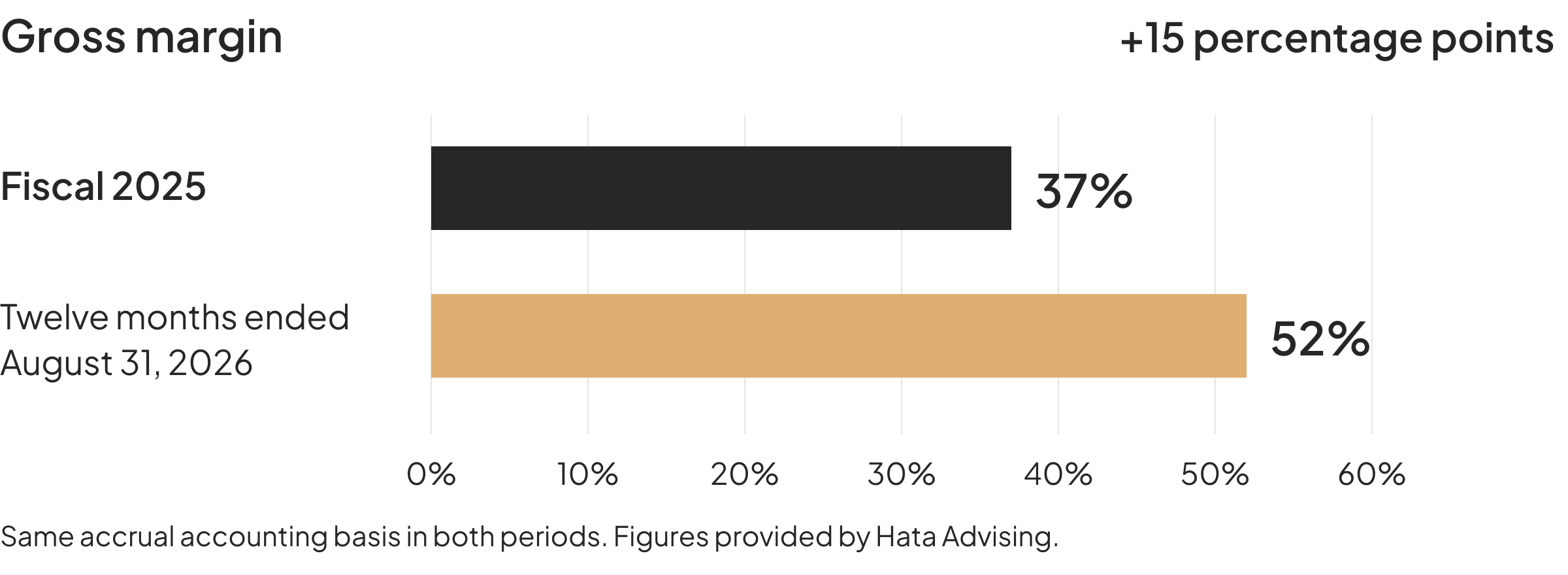
Gross margin was 37% for fiscal 2025. For the twelve months ended August 31, 2026 it was 52%, 15 percentage points higher.
Both figures are on an accrual basis and calculated the same way: revenue less direct job costs, divided by revenue, with direct costs including labor, materials, equipment and sales commissions.
The number is the headline, but the habit is the asset. The company now looks at job costs every week and follows up on discounting, purchasing, installation hours and idle time. That habit helps protect the margin.
Do you know which jobs make money?
If your job costing cannot tell you, start there. Talk with Hata Advising’s CPA-led team about your job margins.
Explore our fractional CFO services for HVAC companies, electrical contractors and plumbing companies.
Sources and measurement
Client figures and engagement details provided by Hata Advising. Client identity withheld. Results vary by business.
ServiceTitan Contractor Playbook, KPIs and Tracking. Published targets are reference points; cost definitions and job mix matter.