

Quality of Earnings: Prepare Before You Sell Your Business
When an owner decides to sell, they usually think the hard part is agreeing on a price. It is not. The hard part comes after, when the buyer’s team opens the books and runs a quality of earnings analysis to test whether the profit you are claiming is real. That process is where deals get repriced, delayed, or lost, and it is why the owners who sell well start preparing long before they ever go to market.
What a Quality of Earnings Analysis Is
A quality of earnings analysis, often shortened to QoE, is a deep examination of how a business actually makes its money and whether that profit is sustainable and repeatable. It is not an audit. An audit checks whether your books follow accounting rules. A QoE asks a sharper question: if a buyer owns this company next year, will these earnings still show up?
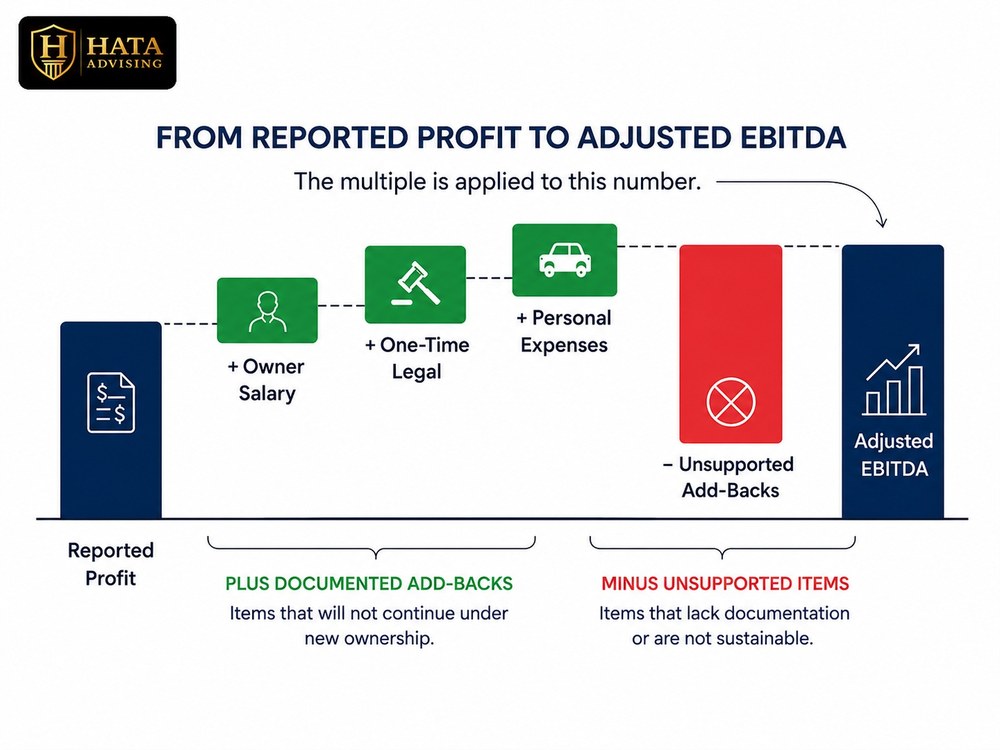
The analysis produces an adjusted earnings number, usually adjusted EBITDA, and that number is what the purchase price is built on. Buyers apply their valuation multiple to adjusted earnings, not to whatever your income statement says. So this analysis does not just describe your value. It effectively sets it.
What Buyers Test
A few questions drive the whole exercise:
- Is the revenue real and recurring, or propped up by a few customers or one good year
- Are the margins sustainable, or boosted by something that will not continue after the sale
- Which expenses truly belong to the business, and which are the owner’s personal spending run through the company
- Are there costs the business will have to carry going forward that are not showing up yet
- How much working capital does the business actually need to operate day to day
Every adjustment the buyer’s team makes moves the earnings number, and therefore the price. A single unsupported item can cost a multiple of itself off the purchase price.
The Add-Back Battle
The most negotiated part of any QoE is the add-backs, the items a seller adds back to profit because they will not exist under new ownership. An above-market owner salary, personal vehicles, one-time legal fees, a family member on payroll who does not work in the business. Legitimate add-backs raise adjusted earnings and directly raise the price.
The catch is that buyers are deeply skeptical of owner-provided add-backs. An add-back you claim with no documentation gets struck, and once a buyer strikes one, they question all of them. An add-back that a third party has verified, with the paper trail behind it, tends to hold. That difference alone can be worth a meaningful piece of the purchase price.
Why Sellers Get Caught Off Guard
Most owners run their books to minimize taxes, not to present the business for sale. Personal expenses are mixed in, the records are cash-basis and a little loose, and revenue concentration or one-time bumps were never separated out. None of that is wrong for running the company. But when a buyer’s team finds it mid-diligence, every unexplained item becomes a reason to lower the offer, hold back part of the price, or walk.
Surprises during diligence do not just cost money. They cost trust, and a buyer who stops trusting the numbers renegotiates everything. Dealmakers call it re-trading, and it almost always moves the price in one direction.
Do the Analysis Before the Buyer Does
The fix is a sell-side quality of earnings review, run on your own business before you go to market. Think of it as the appraisal before you list the house. It will not replace the buyer’s own diligence, but it changes the entire dynamic:
- Problems surface while you still have time to fix them, not mid-negotiation
- Your add-backs arrive documented and defensible instead of hopeful
- Diligence moves faster because the work is organized before the buyer asks
- You control the narrative around your numbers instead of reacting to someone else’s version
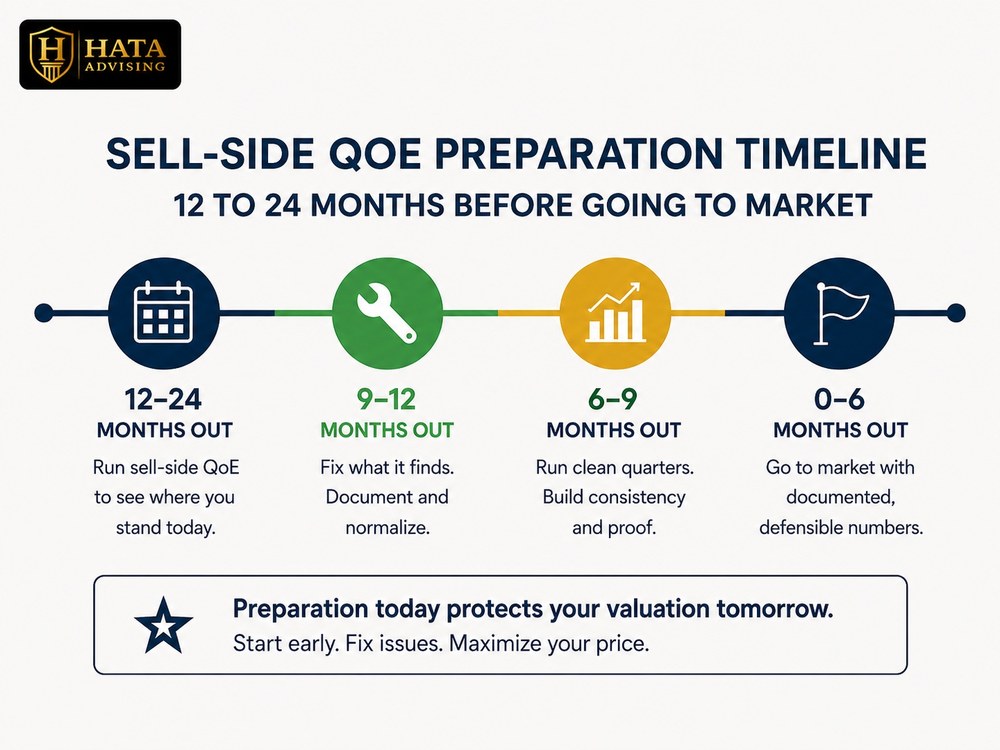
Timing matters. Starting a year or more before you plan to sell gives you time to clean up the records, resolve the issues the review surfaces, and in some cases run the business for a few quarters with the improvements in place, which shows up directly in the earnings a buyer will pay for.
What This Looked Like in Practice
A company preparing to sell wanted to go to market clean rather than discover problems mid-diligence. We built a sell-side quality of earnings analysis ahead of the sale: converting the records to an accrual view a buyer would recognize, normalizing the earnings, separating recurring revenue from one-time items, identifying owner-specific expenses, and documenting every adjustment so it was defensible.
Going in with the work already done changed the dynamic. Instead of a buyer’s team finding surprises and using them as leverage, the seller controlled the narrative, presented a clean and supported earnings number, and protected the price.
The Bottom Line
Your price is set by adjusted earnings, and adjusted earnings are set by a quality of earnings analysis. That analysis is going to happen whether you prepare or not. The only question is whether you run it first, on your terms, with time to fix what it finds, or let the buyer run it on theirs. The owners who sell well test their own numbers years before a buyer ever does.
Thinking about selling in the next few years? Hata Advising runs sell-side quality of earnings reviews that get your numbers deal-ready before a buyer ever sees them. Book a free consultation at https://hataadvising.com/contact or call 801.631.5123.