

It is one of the most disorienting things an owner can experience. The income statement shows a healthy profit, the accountant confirms it, and yet there is never enough cash. Payroll is a scramble, bills get stretched, and the profit on paper feels like a cruel joke. Usually no one made a mistake. Profit and cash flow simply measure two different things.
Profit Is an Opinion, Cash Is a Fact
Your profit and loss statement records revenue when you earn it and expenses when you incur them, regardless of when money actually changes hands. That approach, called accrual accounting, is the right way to judge whether the business is fundamentally sound.
But it says nothing about timing. You can book a profitable sale today and not collect the cash for sixty days. The income statement calls that profit. Your bank account calls it nothing yet.
Cash flow, by contrast, only counts money that has actually arrived or left. It does not care whether you have earned it. That is why a profitable company can be cash-poor while a money-losing one looks flush for a while.
Where Your Money Is Actually Hiding
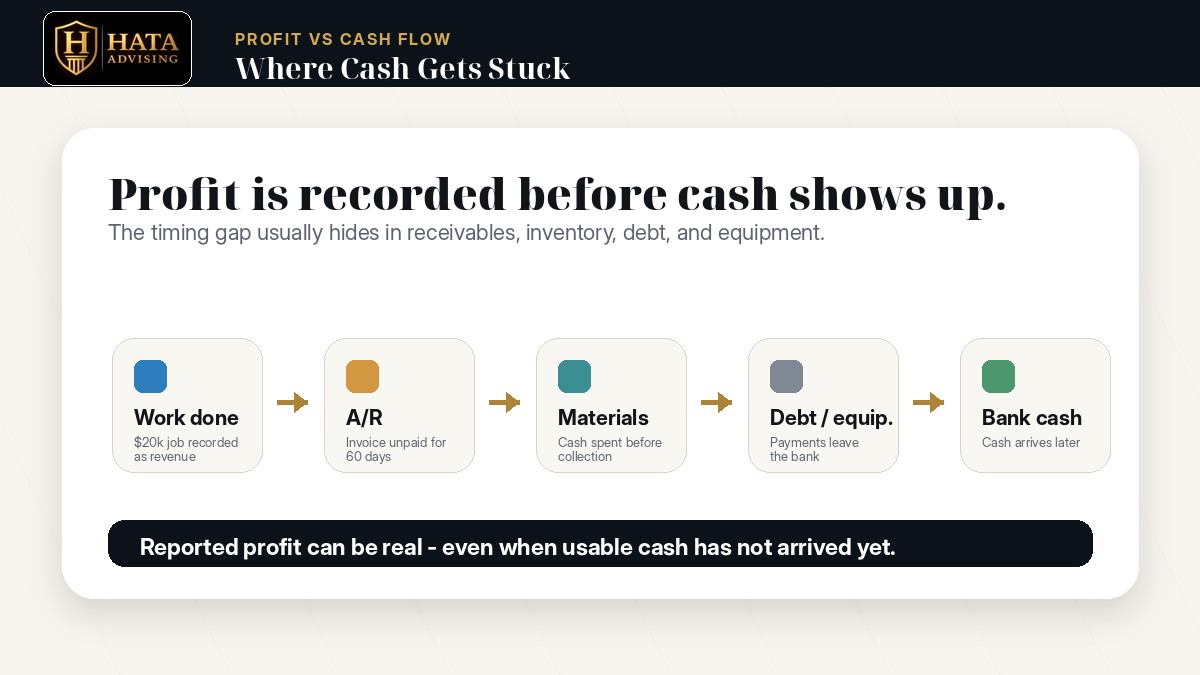
If you are profitable but broke, the cash is almost always tied up in a handful of predictable places:
- Accounts receivable, work you have completed but have not been paid for
- Inventory or materials you bought but have not yet sold
- Debt principal payments, which reduce what you owe without reducing profit. Interest is accounted for separately and is generally an expense.
- Equipment purchases, which the income statement spreads over years even though the cash left all at once
These items can reduce cash or delay collection without reducing profit by the same amount in the same period. That timing difference helps explain the gap between profit and cash.
A Simple Example
Imagine you finish a $20,000 job in March and record it as revenue that month. On paper, March looks like a strong, profitable month. But the customer does not pay until May. Meanwhile you have already paid your crew, bought the materials, and covered the fuel to get there. For two months, that profitable job is actually pulling cash out of your business. The profit was real. The cash simply had not arrived yet, and that lag is where otherwise healthy companies get caught.
Why This Matters More Than It Seems
A profitable business that runs out of cash still fails. Cash is what makes payroll, pays suppliers, and keeps the lights on. Profit is a verdict on the business model. Cash is what keeps you in business long enough to enjoy it.
Fast-growing companies are especially exposed. Growth consumes cash through more receivables, more inventory, and more payroll ahead of collection, so the faster you grow, the more profit can pile up on paper while cash gets tighter. Many healthy-looking companies have failed precisely because they grew faster than their cash could support.
How to See Profit and Cash Flow Together
The fix is not to abandon the income statement. Profit still tells you whether the business model works over time. The point is to read it alongside two other tools that show you the cash picture it leaves out.
A Cash Flow Statement
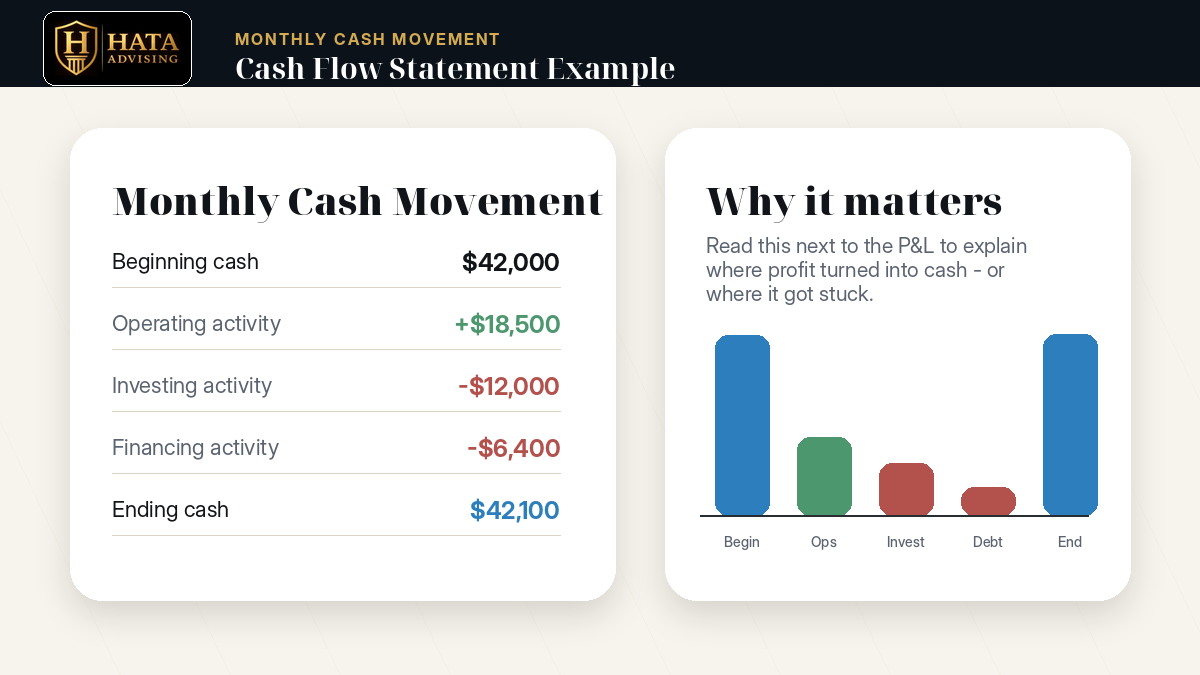
A cash flow statement shows where money actually moved, sorting it into operating, investing, and financing activity. It reveals whether your profit is turning into real cash or getting stuck along the way.
A Short Cash Forecast
A simple forward-looking cash forecast tells you what is coming in the next several weeks: which weeks are tight, which are comfortable, and when a large payment is due. Profit tells you whether the model works. The forecast tells you whether you will make it to next month. An owner needs both, and the forecast is the one that prevents the surprises.
A Habit That Ends the Surprises
Once a month, sit down with three numbers: your profit for the period, your change in cash, and the difference between them. Then account for that difference. Did receivables grow? Did you pay down a loan? Did you buy equipment?
When you can explain the gap every month, the mystery disappears, and you start managing cash on purpose instead of reacting to it after the fact.
The Bottom Line
A profit and loss statement is not a measure of how much cash you have. It is a measure of whether your business is sound over time. The two diverge because of timing, receivables, inventory, debt, and big purchases. If you are profitable on paper but tight on cash, you do not have a profit problem. You have a cash-flow problem, and it is a very different thing to fix.
If your profit and your bank balance do not agree, Hata Advising can build the cash-flow visibility that turns paper profit into money you can actually use. Book a free consultation to get started.